




 Geospatial Mapping
Geospatial Mapping in Urban Planning & Smart Cities
The future of geospatial mapping is set for major advancements as technology evolves. In 2025, AI-powered GIS, 3D mapping, and real-time data integration will enable faster, more accurate decisions in urban planning, infrastructure, environmental monitoring, and disaster management. Drone technology and LiDAR scanning are gaining popularity, providing precise geospatial data with less manual effort. Cloud-based GIS platforms make information easily accessible, shareable, and scalable for global teams. These innovations are transforming how organizations analyze and utilize spatial data, driving smarter solutions and improved efficiency across industries.
Digital twins, virtual representations of real-world environments, will play a major role in planning and simulation, helping cities and industries optimize resources.
Geospatial mapping integrates with IoT sensors, enabling real-time tracking of environmental and infrastructure conditions. This delivers actionable insights and improves decision-making. As industries and governments adopt these technologies, demand for skilled geospatial analysts and innovative mapping solutions grows.
These technological advancements are expected to make 2025 an exciting and transformative year for the geospatial field, opening numerous opportunities for smarter solutions, innovative applications, enhanced efficiency, and improved resource management across a wide range of industries worldwide.
Advanced Drone Technology Enhancing Geospatial Mapping
Drone technology is revolutionizing geospatial mapping by providing high-resolution aerial imagery and precise topographic data quickly and efficiently. Drones equipped with LiDAR and multispectral sensors can capture vast areas in a fraction of the time traditional surveys take, reducing manual effort and cost.
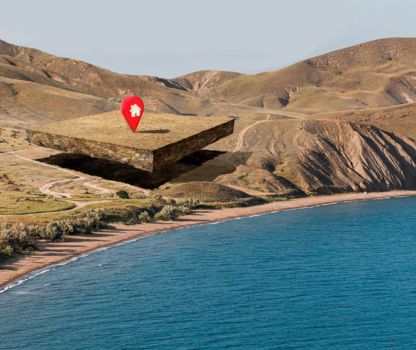

This valuable data is essential for creating accurate 3D maps, monitoring environmental changes over time, supporting urban planning projects, and enabling informed decision-making across a wide range of infrastructure and environmental management applications.
By integrating drone-collected data with GIS platforms, organizations can perform detailed spatial analysis, improve decision-making, and optimize resource allocation.